Broward’s 2026 primary turnout was 16.24%, down 4.49 percentage points from 20.73% in 2022.
That decline deserves our attention—but it should not lead us to label Broward voters apathetic.
Florida’s closed-primary system is an important factor to consider. In partisan primary contests, voters generally must be registered with the corresponding political party. However, all registered voters may participate in nonpartisan contests, certain universal-primary contests and public measures appearing on the primary ballot.
Broward’s voter registration has also changed significantly since 2022. Democratic registration has declined substantially, while Republican registration has increased and NPA registration has declined. These changes provide important context when comparing participation across election years.
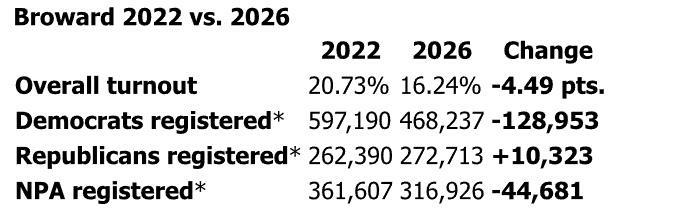
*Registration figures are Broward County active registered voters as of July 31, 2026. They are presented to illustrate how the electorate has changed and are not the denominator used to calculate the reported primary turnout rate. Florida notes that the number of voters eligible to participate in a primary can be smaller than the total number of registered voters.
What We Learned
Our voter-education campaign gave us useful information about how different audiences responded to different messages.
Spanish-language content generated strong engagement, and younger audiences responded to relatable, locally relevant creative.
These results reinforce the importance of tailoring voter education to the communities and audiences we are trying to reach.
The League can carry these lessons forward as we continue our voter-education and outreach efforts through November.
Measuring Our Progress
We cannot attribute the primary’s turnout to any single outreach effort. What we can measure is whether the League is expanding its own capacity to reach and communicate with voters.
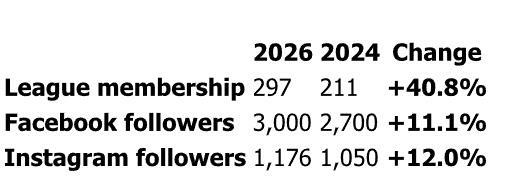
These are encouraging signs that the League is building its own audience and expanding its ability to reach and communicate with voters.
The Bottom Line
Low turnout is not a reason to conclude that Broward voters do not care about their communities or their democracy.
It is a reason to ask better questions:
Who are we reaching?
Which voters are being left out?
Which messages resonate?
And how can we make participation easier and more relevant?
That is the work ahead for November—and it is where the nonpartisan League of Women Voters can contribute: providing trusted voter information, reaching communities where they are, and helping make participation accessible to more Broward voters.
Democracy works best when voters have the information and opportunity to participate.